SAPCA Registered, Certified and Experienced Pest Technicians
12 Local Branches across South Africa for nationwide coverage
Protecting businesses and homes in South Africa from Pests for 50 Years
Professional Mosquito & Midge Control in South Africa
In South Africa, mosquitoes and midges are more than just a seasonal nuisance. Besides disrupting your sleep and ruining outdoor moments, these flying insects can pose genuine health risks, including the transmission of malaria. Whether you are dealing with relentless buzzing or itchy bites, managing these persistent pests requires a targeted and strategic approach.
At Rentokil, we provide expert, safe, and reliable mosquito and midge control solutions for both homes and businesses. By combining global expertise with local insight, we effectively protect your property from infestations.
What's the Difference Between Mosquitoes and Midges?
While often grouped together because of their pest behavior, mosquitoes and midges have distinct lifecycles. Understanding these behavioral differences is key to effective mosquito control.
Mosquitoes
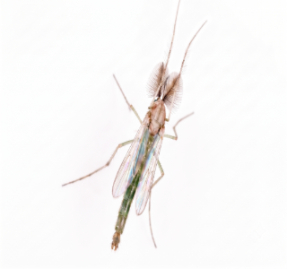
Slender, six-legged insects distinguished by scaled, veined wings and a signature needle-like proboscis. Females utilise this to pierce skin for feeding. Development is rapid (6–10 days), typically occurring in open standing water like drains and ponds.
Midges
Short, scale-free wings. Unlike mosquitoes, their mouthparts are either non-functional or, in biting species, feature cutting blades rather than a piercing needle. They require significantly more time to mature (2–6 weeks) and breed in damp mud, soil, or decaying vegetation.
Types of Midges and Mosquitoes in South Africa
Effective pest control starts with accurate identification. Our SAPCA-certified technicians are trained to distinguish between biting midges, non-biting midges, and the three main species of mosquitoes found in South Africa—Anopheles, Culex, and Aedes—ensuring the most targeted and effective treatment.
Prevention is your first line of defense. While our professional treatments eliminate active infestations, eliminating breeding sites early keeps pests from returning.
For Homeowners (Residential) -
Keep your family, pets, and outdoor living areas safe with these simple daily habits:
Eliminate Standing Water: Regularly empty plant saucers, watering cans, pet bowls, and birdbaths.
Cover Water Storage: Ensure rainwater harvesting tanks and water butts are fitted with tight-fitting lids or fine mesh screens.
Routine Maintenance: Clear leaves from gutters and keep gardens free of pockets of trapped moisture.
Secure Entry Points: Keep windows and doors closed at dusk, or install fitted insect screens to keep indoor spaces pest-free.
For Businesses & Property Managers (Commercial) -
Protect your brand reputation, staff, and visitors by addressing high-risk site areas:
Manage Site Drainage: Regularly inspect flat roofs, HVAC drip trays, and drainage channels for pooled water.
Maintain Grounds & Landscaping: Keep retention ponds clear of excessive reeds and trim back dense vegetation where adult midges and mosquitoes harbor.
Secure Bulk Storage: Ensure municipal water tanks and outdoor storage containers are fully sealed or treated.
Install Insect Barriers: Fit high-traffic entrance zones, kitchens, and dining areas with commercial fly screens or automated air curtains.
Understanding Mosquito-Related Health Risks in South Africa
Mosquitoes are recognised globally as disease vectors, but it is important to note that not all mosquitoes carry diseases. Out of hundreds of species in South Africa, most are simply a painnuisance that leave itchy bites. However, specific species in key geographical zones do pose health risks, making targeted identification and control essential:
Endemic Malaria Zones: Malaria is strictly transmitted by female Anopheles mosquitoes. This risk is localised to specific lowveld areas, such as Maputaland/uMkhanyakude (KZN), the Kruger National Park region, and northern border zones.
Nationwide Viral Risks: Certain Culex mosquitoes (common house mosquitoes) and Aedes species can transmit viral conditions like West Nile Virus or Rift Valley Fever. While less common in urban residential homes, these remain an important focus for farming and agricultural properties.
Travel-Related Vectors: Diseases like Zika and Dengue are not endemic to South Africa. However, local urban Aedes aegypti mosquitoes can potentially act as vectors if infected by returning international travelers.
Expert Mosquito & Midge Control Services
Effective control requires more than just a quick fix; it demands a strategic, science-led approach. At Rentokil, we utilise an Integrated Pest Management (IPM) methodology. This ensures we don't just treat the immediate symptoms—we identify and address the root cause of infestations to prevent recurrence and keep your property protected.
Our Integrated Management Process for Mosquito Control
Our SAPCA-certified technicians follow a rigorous four-step process to ensure your property remains protected:
1. Survey & Risk Assessment:
A full site inspection to identify mosquito and midge species, map out breeding hotspots (stagnant water and damp soil), and locate key entry points across your property.
2. Tailored Treatment Plan:
Based on the survey, we design a customised solution using a combination of targeted treatments that are safe for your specific environment, whether it is a family home or a food-processing facility.
3. Source Reduction & Exclusion
We provide expert advice and physical solutions to remove breeding grounds—such as treating water sources with larvicides—and recommendations for proofing your property against re-entry.
4. Monitoring & Reporting:
For businesses, we offer ongoing monitoring and detailed reporting to ensure compliance with health and safety audits. We track pest trends to predict and prevent future outbreaks before they happen.
We employ a range of advanced technologies and treatments to target mosquitoes and midges at every stage of their lifecycle:
Larviciding (Breeding Prevention): We apply specialist treatments to breeding sites like drains, ponds, and stagnant water features. This inhibits larval development, preventing the problem before the insects can fly or bite.
Thermal Fogging & ULV Misting:For immediate relief from heavy infestations, we use Ultra-Low Volume (ULV) misting or thermal fogging. This disperses minute droplets of insecticide to penetrate dense foliage and hard-to-reach areas. ULV misting is exceptionally effective for both mosquitoes and knocking down dense midge swarms in outdoor entertaining areas and garden foliage.
Residual Spray Treatments: We apply long-lasting residual sprays to surfaces where these insects land and rest, providing continued protection for weeks after the initial treatment.
Indoor & Outdoor Traps: We utilise eco-friendly innovative traps that attract and capture biting insects without the widespread use of chemicals, making them ideal for sensitive environments.
Why Choose Rentokil?
Species Identification: Accurate identification is critical because control methods vary between species. Professional expertise ensures treatments directly target the correct breeding environment.
Integrated Pest Management (IPM): We use science-backed methodologies (IPM) that treat not just the symptoms (adults) but the root causes (hidden breeding sites).
Business Safety & Compliance: Our SAPCA-Certified certified technicians use eco-friendly, family-safe formulations that adhere strictly to South African health regulations and meet rigorous commercial audit standards.
Long-Term Protection: Unlike temporary DIY solutions, our professional services provide a strategic, ongoing maintenance plan to prevent future infestations
Mosquitoes are primarily attracted to the carbon dioxide we exhale, as well as body heat and sweat(lactic acid). They can also be drawn to dark-coloured clothing and scented products
Are mosquitoes in South Africa dangerous?
Yes, they can be. While most mosquito bites cause nothing more than itchy bites and irritation, some mosquito species in South Africa can transmit diseases such as malaria, particularly in parts of Limpopo, Mpumalanga, and northern KwaZulu-Natal.
How do professionals get rid of mosquitoes?
Professional control involves a dual strategy: eliminating breeding sites (source reduction) to stop larvae, and using targeted treatments (such as fogging or residual sprays) to control adult populations.
What smells do mosquitoes hate?
Mosquitoes rely on their sense of smell to find you, so natural scents like citronella, eucalyptus, and lavender temporarily mask the CO₂ and body odour they track. However, plant-based remedies are rarely enough on their own.
How to stop mosquitoes from biting you?
To minimise bites, apply a DEET-based mosquito repellent, wear light-coloured long sleeves, and stay indoors at dawn and dusk. Keep doors and windows screened or closed, use fans to disrupt their flight, and clear standing water to eliminate breeding sites. For persistent infestations, rely on professional pest control.
Where are mosquitoes found?
Mosquitoes are found across South Africa, in both urban and rural settings. They thrive wherever they can access standing water for breeding, such as in ponds, drains, gutters, and containers. While nuisance species are widespread, disease-carrying mosquitoes, such as those that transmit malaria, are generally limited to specific endemic zones, including parts of the lowveld in Limpopo, Mpumalanga, and northern KwaZulu-Natal.
Are midges as bad as mosquitoes?
No, midges are not as bad as mosquitoes because they rarely transmit serious diseases to humans in South Africa. However, biting midges can be more of a nuisance. Their tiny size allows them to slip through standard window screens, and they attack in relentless swarms that leave itchy, irritating bites.
What is another name for a midge?
In South Africa, midges are colloquially referred to as "miggies" or "muggies." Internationally, they are frequently known as "no-see-ums" or "punkies" due to their minute size. It is essential to distinguish these biting pests from harmless non-biting midges or dark-winged fungus gnats, which may swarm near plants and soil but pose no threat to humans.